When international trade buyers and e-commerce merchants compare parcel or cargo consolidation against direct factory shipping, they frequently fall into a common financial trap: evaluating logistics options solely based on the initial freight quote. In real-world cross-border supply chains, what appears to be a bargain during the booking stage often evolves into a costly mistake once origin handling fees, destination deconsolidation costs, customs clearance holds, storage penalties, and documentation discrepancies accumulate.
Consider a practical scenario: an importer located in Brussels, Belgium, sources inventory from five distinct factories across Shenzhen, Guangzhou, and Yiwu in China. On paper, booking direct factory shipping for each consignment seems straightforward because each manufacturer dispatches its own parcel or container. However, when five separate shipments arrive at Belgian border control or the Port of Antwerp, the importer is hit with five distinct administrative fees, five customs entry documentation charges, and elevated risks of delays. If just one supplier issues an incorrect commercial invoice, omits a specific HS code, or incorrectly labels a master carton, the entire consolidated lot or individual shipment faces customs quarantine. A mere 3-day hold at border inspection can instantly eliminate $300 in nominal freight savings while triggering $250 to $600 in unexpected port storage and demurrage fees.
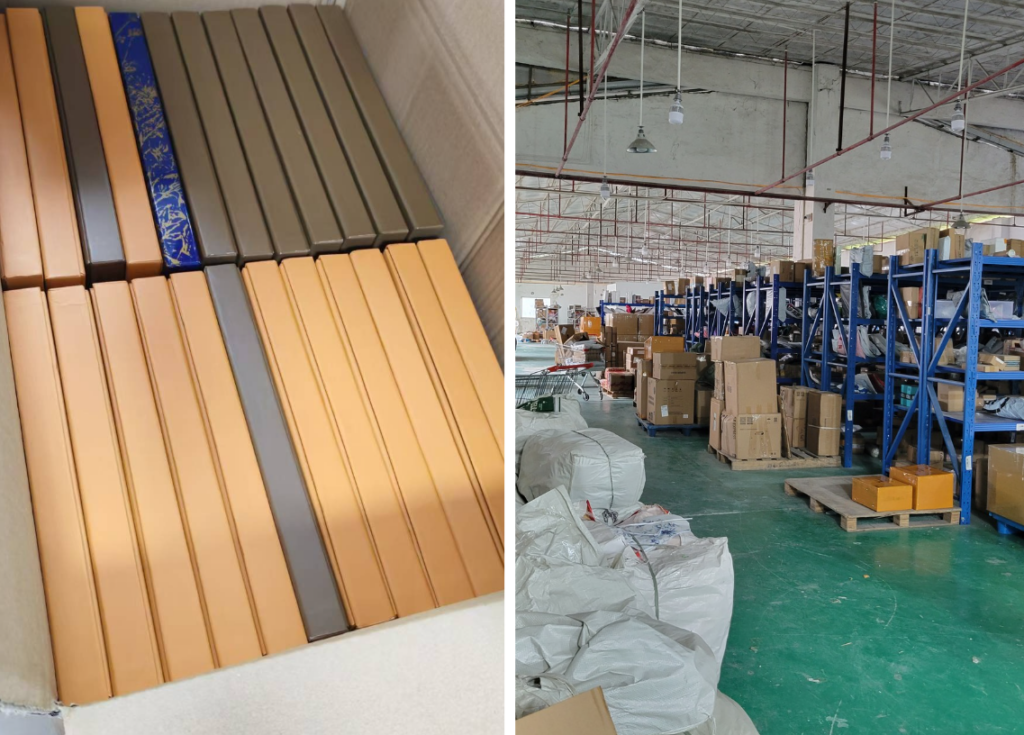
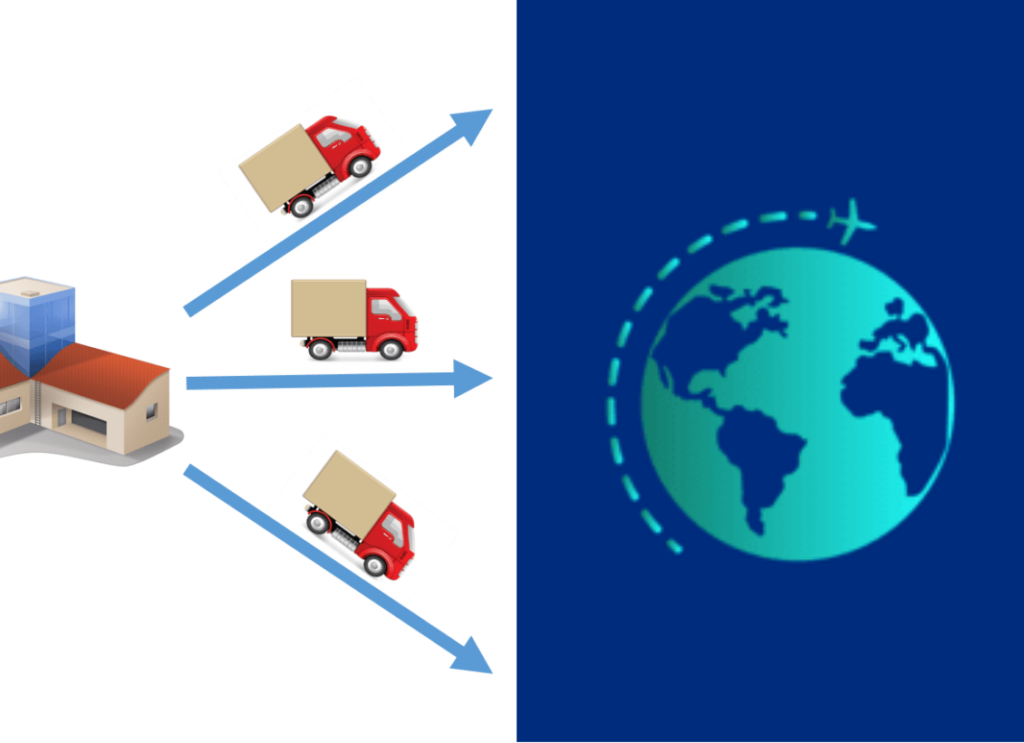
Conversely, direct shipping offers dedicated transit and fewer intermediary handling stops, making it ideal for production-critical spare parts, high-value electronics, medical devices, or urgent seasonal stock. But for the vast majority of multi-supplier orders, routine replenishment, and small-to-medium enterprise (SME) imports, strategic cargo consolidation provides a far superior balance of cost, safety, and supply chain control.
Below is an in-depth operational breakdown of the Top 10 Benefits of Choosing Cargo Consolidation Over Direct Factory Shipping, demonstrating how consolidating your inventory at a unified origin hub like Freight2Me transforms your international bottom line.
Direct Side-by-Side Comparison: Cargo Consolidation vs. Direct Factory Shipping
| Operational Cost Vector | Cargo Consolidation (Freight2Me Hub) | Direct Factory Shipping (Single Supplier Direct) |
| Baseline Freight Cost | Significantly Lower (Shared container/flight capacity for 3–15 CBM) | High (Paying for unutilized capacity or premium express lanes) |
| Origin Handling Fees | Streamlined (Aggregated into a single warehouse intake and loading pass) | Multiplied (Repeated per-factory trucking, export filing, and doc fees) |
| Customs Clearance & Documentation | Single Entry Filing (Harmonized master invoice and packing list) | Fragmented Entries (Multiple import declarations, higher clearance overhead) |
| Quality Control (QC) & Verification | Pre-Shipment Gatekeeping (Inspection, photo proof, repacking before export) | Post-Arrival Discovery (Damaged/incorrect goods discovered only in Belgium) |
| Volumetric Weight Mitigation | Optimized (Custom box trimming, repacking, eliminating dead space) | Unoptimized (Factories ship in oversized master cartons filled with air) |
| Transit Time & Predictability | Adds 2–4 days for warehouse intake and repacking schedule | Faster (Direct line haul, 10–20% quicker transit) |
| Cargo Protection & Damage Risk | Reduced by 50% via professional export packaging upgrades | Higher risk of box crushing if factory uses thin domestic cardboard |
| Best Operational Use Case | Multi-supplier sourcing, routine stock, SMEs, 2–15 CBM orders | Production-critical parts, ultra-urgent stock, high-value single items |
What is Cargo Consolidation?
Cargo consolidation (or parcel consolidation) is the operational practice of gathering multiple smaller consignments from distinct suppliers and combining them into a single, unified master shipment. In international trade between China and Europe, this manifests as Less-than-Container Load (LCL) ocean freight consolidation, consolidated air freight, or buyer’s consolidation hubs.
Instead of paying full-container rates for partial volume (e.g., 3 CBM, 5 CBM, or 8 CBM), importers utilize consolidation warehouses to share transit space—whether in a shipping container, truck, or aircraft hold—paying strictly for the exact volume or weight their goods occupy.
What is Direct Factory Shipping?
Direct factory shipping refers to dispatching goods directly from an individual manufacturer’s factory floor to the destination buyer with zero intermediate consolidation stops. In ocean freight, this typically represents Full Container Load (FCL) transport; in air cargo, it means dedicated courier or express air shipment.
While direct shipping provides a linear route with fewer physical handovers, it mandates that the buyer pay for dedicated space regardless of whether the vehicle or container is fully utilized. For smaller shipments, this results in exorbitant unit costs.
Top 10 Benefits of Choosing Cargo Consolidation Over Direct Factory Shipping
1. Massive Reduction in Overall Landed Freight Costs
The most immediate advantage of cargo consolidation is cost reduction. By merging 3 CBM from Supplier A, 4 CBM from Supplier B, and 2 CBM from Supplier C into a single master shipment, importers share the primary line-haul transport expense. Compared to shipping three distinct LCL or express parcels, cargo consolidation delivers 18% to 30% direct savings on total freight expenditure.
2. Elimination of Multiplied Destination Port and Administrative Fees
When goods arrive in Belgium via direct factory shipping from multiple suppliers, local port agents charge terminal handling fees (THC), import clearance documentation fees, and turnover charges per shipment. Consolidation aggregates five separate bills of lading into one master declaration, eliminating redundant paperwork fees and saving hundreds of dollars per trade cycle.
3. Dimensional Weight and Volumetric Packaging Optimization
Factories in China routinely package exports in oversized, low-grade cardboard boxes padded with excessive air, forcing importers to pay steep volumetric weight surcharges. Professional consolidation services like Freight2Me inspect incoming parcels, eliminate redundant factory outer boxes, consolidate items into rigid export-grade cartons, and optimize volume—slashing chargeable weight dramatically.
4. Origin Quality Control (QC) and Photo Verification Gatekeeping
Once a direct factory shipment sails from Shanghai or Shenzhen, any product defect, incorrect quantity, or missing labeling becomes an expensive international nightmare to resolve in Europe. Cargo consolidation hubs conduct origin receiving inspections, capturing high-resolution photos and verifying SKU counts before international transit, allowing issues to be rectified immediately with domestic China suppliers at zero cross-border return cost.
5. Streamlined Customs Clearance via Unified Documentation
Filing customs declarations for five separate factory shipments requires coordinating five commercial invoices, five packing lists, and managing varying HS codes. A single mistake risks an automated audit by Belgian customs at Antwerp or Brussels Airport. Cargo consolidation unifies all origin manifests into a harmonized, fully compliant documentation package, ensuring smooth clearance through European border protocols.
6. Free Warehouse Storage Buffers for Supply Chain Flexibility
Coordinating readiness dates across multiple Chinese manufacturers is inherently chaotic; Factory A may finish production on the 5th, while Factory B finishes on the 20th. Direct shipping forces early suppliers to hold stock or charges buyers rush fees. Consolidation providers like Freight2Me offer 30 days of free warehouse storage, allowing buyers to accumulate inventory seamlessly until all orders are ready to ship together.
7. Enhanced Protection Against Cargo Damage and Transit Loss
Direct factory shipments often rely on domestic-grade packaging ill-suited for rough ocean transit or multi-modal transfers. During consolidation, warehouse technicians apply double-wall export cartons, corner protectors, strapping, and waterproof pallet wrapping. This rigorous handling reduces package crushing and cargo damage risk by up to 50%.
8. Lower Environmental Impact and Reduced Carbon Footprint
Shipping multiple half-empty containers or fragmented courier packages generates substantial carbon emissions per unit shipped. Combining freight into optimized master containers maximizes space utilization on vessels, trucks, and cargo planes. By reducing the net number of transit vehicles required, consolidation supports sustainable, green logistics practices.
9. Predictable Shipping Schedules and Improved Inventory Management
Consolidated freight operates on structured, regular sailing and flight schedules between major Chinese export hubs and European distribution centers. Rather than tracking dozens of disparate tracking numbers, importers manage a single master tracking ID, allowing procurement teams in Belgium to plan inventory replenishment and sales campaigns with far greater accuracy.
10. Financial Flexibility for Small and Medium Enterprises (SMEs)
Direct FCL or express shipping requires substantial upfront capital to justify dedicated transport space. Cargo consolidation democratizes global logistics: SMEs can import smaller quantities (e.g., 2 to 5 CBM) at competitive volume rates, conserving working capital, improving cash flow, and enabling businesses to test new product lines without committing to full container orders.
Strategic Decision Framework: When to Choose Each Method
- Choose Cargo Consolidation (Freight2Me Hub):
- Sourcing from 2 or more factories across China.
- Cargo volume is between 1 CBM and 15 CBM (SME scale or routine replenishment).
- Primary objective is cutting overall landed cost, reducing administrative fees, and mitigating customs holds.
- Goods allow a flexible 2–4 day buffer for origin warehouse intake, QC, and repacking.
- Choose Direct Factory Shipping:
- Production-critical spare parts or raw materials needed urgently to keep a Belgian factory line running.
- High-value, fragile, or temperature-sensitive capital equipment requiring zero extra handling.
- Full Container Load (FCL) orders where a single supplier fills a full 20ft/40ft container (28+ CBM).
Conclusion & Partnering with Freight2Me
Navigating the financial realities of international freight requires looking far beyond initial freight quotes. While direct factory shipping offers speed and simplicity for urgent, single-source orders, it quickly becomes an inefficient money pit when managing multi-supplier procurement.
By leveraging cargo consolidation, businesses importing into Belgium and across Europe can cut baseline freight overhead by up to 30%, eliminate redundant administrative charges, protect cargo with origin-level repackaging, and maintain full control over their inventory.
Ready to optimize your China-to-Europe supply chain? Partner with Freight2Me to gain access to 30 days of free origin warehouse storage, $0 handling and documentation fees, repacking rates as low as $1/kg, and complete end-to-end customs clearance support. Save on freight overhead, eliminate shipping headaches, and scale your cross-border enterprise with absolute confidence.