For international brands and cross-border enterprise sourcing across eastern and southern China, uncontrolled inventory carrying costs can rapidly erode gross margins. While most professional freight consolidation warehouses in China provide complementary grace periods (typically 30–60 days), mismanaged procurement schedules render these windows useless.
When supplier production finish dates are misaligned, early-arriving stock sits idle on warehouse racks—consuming storage capacity and risking secondary demurrage charges while waiting for delayed components from secondary factories.
To drastically optimize warehouse storage in China, supply chain managers must transition from passive warehousing to active batch scheduling.
Here is an actionable 10-step strategy—powered by our Multi-Supplier Batch Scheduling Playbook—designed to align factory lead times, reduce carrying costs, and maximize cross-docking efficiency in China.
1. Negotiate Buffer Lead Times with High-Risk Suppliers
Not all factories deliver on time. Identify suppliers with a history of line delays and assign them an artificial “internal deadline” 7 to 10 days earlier than your actual consolidation deadline. This prevents delayed items from stalling your storage clock at the central hub.

2. Implement a Staggered Production Release
Instead of issuing Purchase Orders (POs) to 5 different factories on the exact same date, stagger your deposit releases based on each factory’s verified production cycle.
Lead Time Alignment Formula:
Target Order Date=Target Warehouse Arrival Date−Factory Production Lead Time (Days)
If Factory A requires 45 days and Factory B requires 20 days, place Factory A’s order 25 days earlier so both cargoes hit the warehouse floor within the same 48-hour window.
⚠️ Critical Risk — Demurrage & Detention Warnings:
Staggering orders reduces holding costs, but holding cargo too close to carrier departure dates during peak seasons (Q4/pre-CNY) risks rolled bookings. If Factory A finishes early and sits in a port-side bonded warehouse waiting for delayed cargo, Demurrage and Detention charges can easily exceed $150/container/day—dwarfing any storage savings. Always verify your 3PL’s Last Free Day (LFD) before adjusting PO completion dates.
📖 The Batch Scheduling Playbook
Coordinating Multi-Factory Shipping Dates in China
When sourcing across China’s industrial hubs (e.g., Ningbo, Yiwu, Guangzhou, and Shenzhen), aligning arrival dates at your freight consolidation warehouse is critical. Use this 4-step execution workflow:
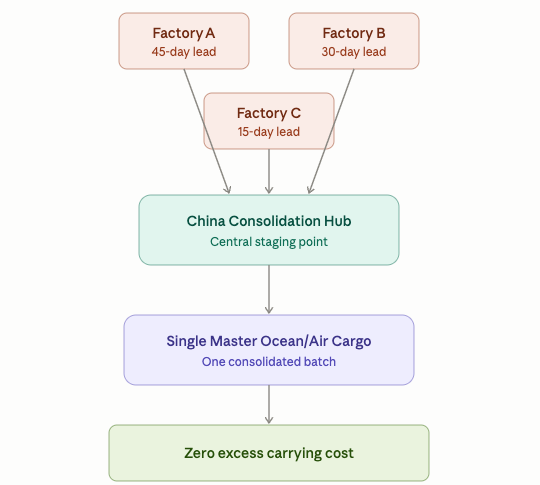
| Execution Step | Operational Action | Supply Chain Outcome |
| Step 1: Raw Material Audit | Audit raw material readiness 15 days before mass assembly completes. | Eliminates unexpected factory line delays. |
| Step 2: Vessel Slot Booking | Reserve container space / air charter slots 10 days prior to estimated completion. | Avoids warehouse bottlenecks waiting for carrier space. |
| Step 3: Staggered Local Logistics | Coordinate inland drayage so long-distance freight arrives first and local cargo arrives last. | Synchronizes warehouse intake windows within 24-48 hours. |
| Step 4: Origin Factory QC | Conduct third-party Quality Control (QC) inspections at the factory before dispatch. | Prevents defective inventory from clogging warehouse storage space. |
3. Standardize Master Carton Specs Across Suppliers
Unusually shaped master cartons degrade palletization efficiency and inflate volumetric space. Require all suppliers to pack goods using standardized carton dimensions.
Pro-Tip — The MOQ Trap:
Forcing rigid carton dimensional changes onto tier-2 factories mid-contract may trigger requests for higher Minimum Order Quantities (MOQs) or custom packaging surcharges. Always lock in master carton packaging standards during initial RFQ negotiations rather than post-PO issuance.
4. Leverage “Hold-at-Factory” Guarantees
Incorporate a “Free Factory Holding” clause into your supplier agreements. If your primary consolidation shipment is delayed, request that suppliers hold finished goods at their facility for 7–14 days before dispatching them to your central hub.
5. Separate High-SKU B2C Items from Bulk B2B Cargo
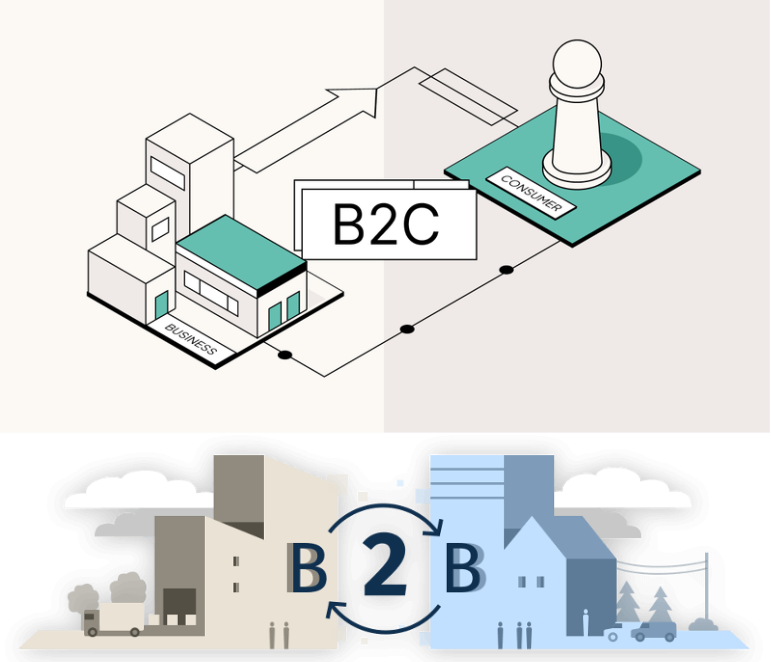
Different cargo flows move at different velocities:
- Bulk B2B Freight: Should utilize Cross-docking in China—moving directly from inbound trucks to outbound containers within 24 hours to eliminate holding fees.
- DTC/B2C Inventory: Should be placed in dedicated pick-and-pack storage locations to support daily direct-to-consumer order dispatch.
6. Conduct In-Warehouse SKU Kitting & Bundling Early
If you offer multi-pack bundles (e.g., combining a tech accessory from Supplier A with a carrying case from Supplier B), request kitting services immediately upon receipt. Bundling items upfront condenses individual supplier packaging into a single unit, drastically reducing total cubic meters (CBM) billed.
7. Establish a Rolling “Cross-Docking” Trigger
Define an automated dispatch threshold. Instruct your 3PL warehouse to automatically build pallets and lock container bookings as soon as 80% of the total order volume reaches the floor, rather than holding expensive warehouse footprint for a minor delayed item.
8. Utilize Digital Warehouse Management Systems (WMS)
Partner with a logistics provider that grants live access to a WMS portal. Real-time EDI tracking alerts notify you the exact minute cargo is scanned into receiving, allowing you to monitor remaining storage thresholds per batch and prevent unexpected holding surcharges.
9. Pre-Clear Customs Documentation During Production
Do not wait for goods to arrive at the consolidation hub before preparing commercial invoices, packing lists, and export licenses. Pre-classifying HS codes and organizing compliance documents while goods are still on the assembly line guarantees immediate export customs clearance upon final cargo arrival.
10. Audit 3PL Storage Terms and Volume Tiers Annually
Warehouse free storage policies vary by season and volume commitments. During peak shipping periods, negotiate custom storage extensions based on your annual freight volume. A reliable China consolidation partner will often extend free holding windows for high-volume accounts to support flexible batching.
Summary: Drive Efficiency via Smart Sourcing & Warehousing
Optimizing your inventory carrying costs in China requires bridging the gap between factory procurement schedules and warehouse operations. By executing this Batch Scheduling Playbook, mitigating hidden demurrage risks, and leveraging cross-docking solutions, global brands can maintain a resilient, cost-effective cross-border supply chain.
Looking to streamline your China warehousing strategy? Contact our logistics team today to explore our China Freight Consolidation Warehouse Solutions, complete with up to 60 days of storage, real-time WMS visibility, and integrated DDP shipping options.